



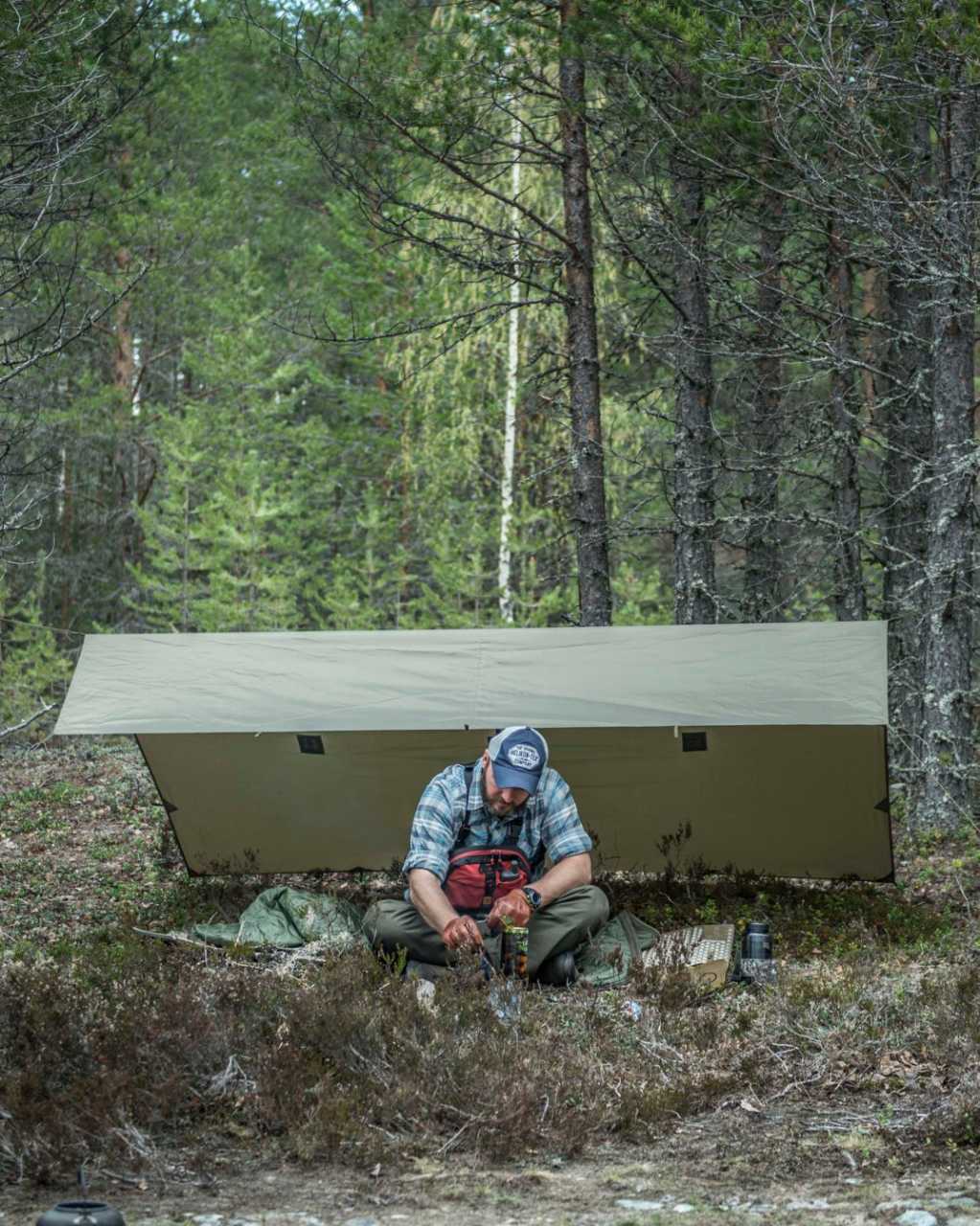
Admittedly, in our latitudes, it is rather unlikely that you will unintentionally find yourself in a real survival situation. But not every outdoor adventure goes according to plan. A sudden change in weather, taking a wrong turn at a fork in the road on unfamiliar and difficult terrain, or an accident during a hike – you can find yourself in a tricky situation faster than you think. For this reason, you should master these 7 survival strategies.
Strategy No. 1: Don't panic!
Every exceptional situation is a test of mental strength. But those who panic endanger themselves even more. Because in a state of panic, you act thoughtlessly and almost certainly make the wrong decisions. If you find yourself in a dangerous situation, you should first force yourself to pause. Much of it is now mental. Take a few conscious deep breaths. Remind yourself that you have dealt with precisely such situations. To a certain extent, you are therefore prepared, and it is absolutely legitimate to tell yourself: I can do this!
Once you have calmed down and cleared your head, try to analyze the situation. Think about what your emergency plan looks like and implement it step by step.
Strategy No. 2: Know and meet your water needs
Finding and making water drinkable is one of the most important survival skills. Even 24 hours without drinking water pose a massive challenge for your body. After three days at the latest, things get really critical. So, if you find yourself in an emergency and have no or too little water, this is one of the first things you need to organize. But how do you go about it?
Basically, in Austria, we are fortunate that both standing and flowing water can usually be found easily – though you should always prioritize flowing water. Animals and animal tracks are good "pointers" when searching, as they also depend on a regular water supply. If you find animal trails, look for places where two or more paths converge into one. Such "larger" paths are often a sign that you should follow that direction too.
Rainwater is also excellent as drinking water. But in an emergency situation, you will hardly have several containers on hand to collect enough water. A good option is therefore to place a few sticks in a container that protrude. More water will stick to them and flow into the container. In summer, when it is very hot during the day and cold at night, dew forms. You can collect this liquid with anything that is as absorbent as possible – for example, a T-shirt. If you wring it out, you can drink the water.
But beware: Contaminated water can quickly lead to diarrhea or stomach pains, which will further weaken you in an emergency. Therefore, it is always advisable to play it safe and treat the water first. You generally have two options for this: Either you boil it – which is considered the safest method – or you filter it. With the help of sunlight, for example (UV rays kill bacteria in the water), you can make water drinkable. But for this, you have to place the water in a PET or glass bottle in direct sunlight for at least six hours.
Alternatively, you can build a filter. However, you will not only need sand and cloth, but also charcoal, as well as patience and practice. Anyone who has actually suffered thirst knows how difficult it is to control oneself and filter the water carefully first. Therefore, our tip: A survival water filter! It weighs hardly anything and can be attached to a hydration pack or water bottle. Or you can drink directly from the water source you found using a straw.
Strategy No. 3: Build a shelter
Being able to build a shelter is one of the basics that every survival enthusiast must master. A survival shelter keeps you warm and dry, but also protects against wind and too much sun. Everything you need for it can be found in the forest: deadwood, leaves, moss, branches, or fir trees. Once you have collected enough material, it's best to proceed in 3 simple steps:
Step 1: Find a kind of wall against which to lean the shelter, ideally a fallen tree or rocks. Alternatively, you can make your own uprights from sturdy, forked branches. You should generally avoid open areas, such as meadows. Firstly, the wind can be very unpleasant there, and secondly, a lot of dew usually forms on open meadows.
Step 2: Lay somewhat thinner branches tightly arranged as a roof structure on these uprights. It is important that the angle between the branches and the ground is at least 45 degrees. This is the only way for water to drain properly.
Step 3: Now fill the roof abundantly with twigs, as well as leaves or moss. Work slowly from bottom to top. The shelter will only be as wind and waterproof as possible if you cover the roof with overlapping natural materials and no sticks protrude from the roof that could channel rainwater inside. If you have a tarp or emergency blanket with you, even better!
Tip: If it looks like rain, you can further protect yourself from moisture with a ditch that you dig around the shelter, which ensures that the water drains away.
All of this is laborious, but vital in an emergency.
Strategy No. 4: Make fire
It sounds trivial, but making fire without matches or a lighter is one of the most difficult tasks. And not just when the wind is whistling around your ears or it's raining heavily. Even in good weather conditions, most people first have to approach the topic carefully. Therefore, you should practice igniting a fire using various methods. Whether it's a fire steel, flint and steel, or a fire piston – each method requires a bit of practice. It's equally important that you familiarize yourself with the different types of tinder. Its purpose is to catch the sparks you generate. Tinder can consist of various materials – the main thing is that it is easily flammable. Generally, it's advisable to always pack a few makeup remover pads. They weigh hardly anything, but are worth their weight in gold when lighting a fire. If you have to search for tinder in the wild, look for
- the fine membranes of birch bark
- dry leaves, lichens, hay, or grass that you can crush
- winged seeds of thistles and dandelions
- mealy fibers of decaying wood
- tree resin
- fatwood
Once you've found your tinder, form it into a small, loose, airy ball. Prepare several small piles of twigs and arrange them by thickness. As soon as the tinder catches a flame, you must react quickly as it will burn out within seconds. Gradually add the twigs to the fire to enlarge it, but be careful not to smother it. It requires some practice in handling, but if you develop the feeling of being able to "read" the fire, it will become easier each time.


Leave a comment
This site is protected by hCaptcha and the hCaptcha Privacy Policy and Terms of Service apply.